Shibuya Crossing: A Visitor's Guide in Tokyo
At a glance
How this guide was made: Editor-reviewed, AI-assisted. Facts are pulled from live Google Places data; images are licensed or public domain. See our editorial policy.
Why go
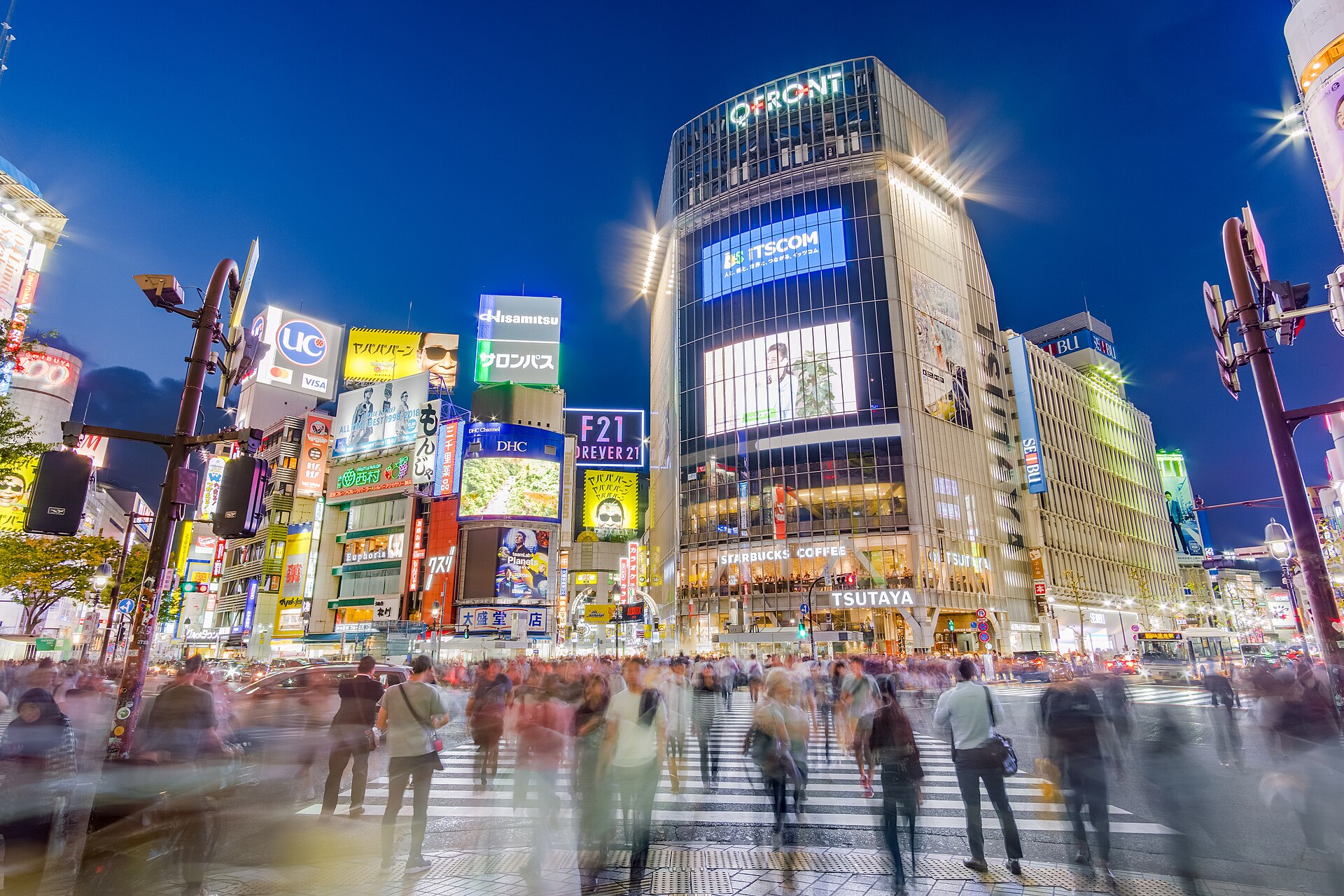
Shibuya Crossing (21 Udagawacho, Shibuya, Tokyo 150-0042) is the intersection you’ve already seen in dozens of films and TV segments about Tokyo — the one where five crosswalks converge and, when the lights change, hundreds of pedestrians flood the street from every direction at once. It’s rated 4.5 stars across more than 22,000 reviews, making it one of the most consistently praised free attractions in the city. There’s no admission fee, no ticket, and no set hours — it’s a functioning street intersection that happens to be one of the world’s busiest and most photographed. At peak times, estimates put the number of people crossing per light cycle well into the hundreds, sometimes over a thousand during evening rush.
Getting there
The crossing sits directly outside the Hachiko Exit of Shibuya Station, one of Tokyo’s largest transit hubs, served by JR lines (Yamanote, Saikyo, Shonan-Shinjuku), the Ginza, Hanzomon, and Fukutoshin subway lines, plus the Keio and Tokyu lines. Take the Hachiko Exit specifically — it deposits you almost on top of the crossing and next to the famous Hachiko dog statue, a popular meeting point named after the loyal Akita who waited for his owner at the station for years. From Shinjuku or Tokyo Station, it’s roughly a 15-20 minute train ride. If arriving by taxi, ask for “Shibuya Hachiko-mae” rather than a street address, since drivers know the intersection by that name.
What to see and do
The obvious move is to simply cross — several times, from different corners, to feel the scale of it. But the real draw for most visitors is finding a vantage point above street level:
- Shibuya Sky — a rooftop observation deck atop Shibuya Scramble Square, offering a full aerial view of the crossing and the Tokyo skyline; tickets are timed-entry and best booked online in advance.
- Starbucks Tsutaya (Shibuya Tsutaya, 2nd floor) — the most famous free-ish viewpoint; you buy a coffee and get a window seat overlooking the crossing, though it’s often standing-room only.
- Magnet by Shibuya109 rooftop — a paid, less crowded alternative view with a small entry fee.
- Shibuya Center Gai and Shibuya109 — the pedestrian shopping street and department store flanking the crossing, good for browsing after you’ve had your fill of photos.
At night, the crossing is framed by giant video screens and neon signage, similar in feel to Times Square, which makes it as much a nighttime spectacle as a daytime one.
When to go
Weekday early afternoons are noticeably calmer if you just want to walk through without a crowd. For photos and atmosphere, go around dusk — roughly 30-60 minutes before sunset through early evening — when there’s still enough light for clear shots but the neon signs and screens have started to glow. Weekend evenings are the most crowded, especially Friday and Saturday nights, and during festivals like Halloween or New Year’s the area can become extremely dense, occasionally with crowd-control measures in place. If you specifically want the “empty crossing” photo, early morning on a weekday (before 8am) is your best shot, though foot traffic never fully disappears.
Nearby & tips
Plan for 20-30 minutes at street level, longer if you’re queuing for Shibuya Sky or a window seat at Starbucks. Combine the visit with a walk through Center Gai for cheap eats and arcades, or head toward Miyashita Park, a multi-level shopping and green space a short walk northeast, for a break from the crowds. The Hachiko statue is a reliable spot to regroup with a group before or after crossing, since phone signal and noise make coordinating mid-crossing tricky. Hold your phone steady and low if filming — the crowd density means sudden jostling is common, and locals move briskly, so linger at the edges rather than stopping mid-crossing for photos.
Hotel prices update live and are shown in your local currency. Booking links are affiliate links — booking through them supports our free guides at no extra cost to you.
Live prices from Klook. Booking through these links supports our free guides at no extra cost to you.
Some links above are affiliate links — if you book through them, Wander Atlas earns a small commission at no extra cost to you. It’s how we keep every guide free.
Frequently asked questions
How do I get to Shibuya Crossing?
Exit Shibuya Station via the Hachiko Exit — it opens directly onto the intersection. The station is served by the JR Yamanote Line, Ginza, Hanzomon, and Fukutoshin subway lines, and the Keio and Tokyu lines.
Is there an entrance fee for Shibuya Crossing?
No, it's a public street intersection and free to visit at any hour. Paid viewpoints like Shibuya Sky or the Magnet rooftop charge separate admission if you want an elevated view.
What's the best time to see Shibuya Crossing?
Dusk to early evening offers the best balance of visible daylight and glowing neon signage. Weekday afternoons are quieter; weekend nights and holidays like Halloween are the most crowded.
Where's the best spot to photograph the crossing?
The Starbucks on the 2nd floor of Shibuya Tsutaya offers a classic window view, while Shibuya Sky (Shibuya Scramble Square) gives a full rooftop panorama. Street-level photos work well from the corner near the Hachiko statue.
How much time should I plan for?
20-30 minutes is enough to cross a few times and take photos at street level; add 45-60 minutes if you want to queue for an elevated viewpoint like Shibuya Sky.
This guide was produced with AI assistance and reviewed against live data sources. Facts such as hours, ratings, and location come from Google Places; images are licensed or public domain. Details can change — please verify before visiting. See our editorial policy.