Gyeongbokgung Palace: A Visitor's Guide in Seoul
At a glance
How this guide was made: Editor-reviewed, AI-assisted. Facts such as ratings and location come from live Google Places data; images are licensed or public domain. See our editorial policy.
Why go
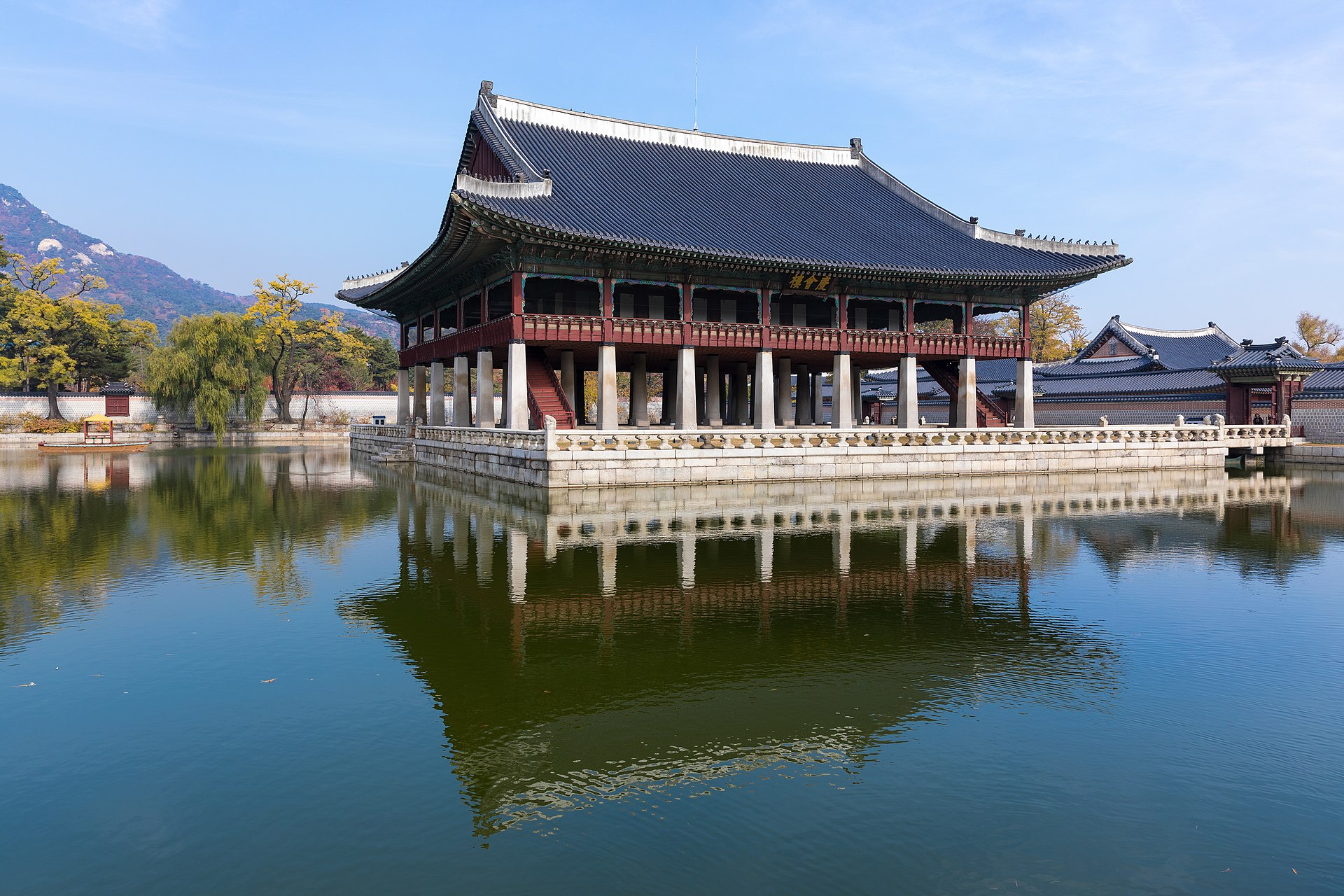
Gyeongbokgung is the first and largest of Seoul’s “Five Grand Palaces,” built in 1395 as the primary royal residence of the Joseon Dynasty. Rated 4.6 stars across more than 46,000 reviews, it’s the most visited palace in Korea and the default introduction to the country’s royal architecture for a reason: the scale is enormous, the setting against Bugaksan Mountain is dramatic, and the compound includes some of the most photographed structures in the country, including Gyeonghoeru Pavilion, a two-story hall built on an artificial lake where kings once hosted state banquets.
Getting there
The palace sits at 161 Sajik-ro in Jongno District, central Seoul. The easiest approach is Gyeongbokgung Station on Line 3 — take Exit 5, and you’ll walk directly onto the palace grounds within a couple of minutes, arriving near the ticket office and Heungnyemun Gate. Anyone coming from Insadong or Bukchon Hanok Village can also walk over in 10-15 minutes, since both neighborhoods border the palace’s east side. Gwanghwamun Station on Line 5 (Exit 2) is another option, putting you closer to the main Gwanghwamun Gate for the guard ceremony.
What to see
Start at Gwanghwamun, the imposing main gate, where the Royal Guard Changing Ceremony takes place a few times daily — check the posted schedule, as it typically runs mid-morning and early afternoon. Once inside, Geunjeongjeon, the throne hall, is the visual centerpiece: a two-tiered stone platform, dragon carvings, and the king’s throne set against a folding screen depicting the sun, moon, and five peaks. Behind it, Gyeonghoeru Pavilion and its lake are best viewed from the northwest corner, especially in autumn when the surrounding maples turn.
Don’t skip Hyangwonjeong, a small hexagonal pavilion on a pond near the rear of the complex, connected by a wooden bridge — quieter than the main halls and a good rest stop. The grounds also contain the National Folk Museum of Korea and the National Palace Museum, both free or low-cost add-ons that explain daily court life and royal artifacts in more depth than signage on the palace grounds itself.
Renting a hanbok (traditional Korean dress) from one of the many shops lining the streets just outside the palace is worth considering: wearing one grants free admission, a detail that has made it a popular ritual for both tourists and Korean visitors alike.
When to go
Morning, right after opening, is the calmest time to see the main halls before tour groups arrive. Spring (April) brings cherry blossoms along the palace walls, while autumn (late October to early November) is arguably the best season, with the ginkgo and maple trees around Gyeonghoeru and Hyangwonjeong turning color. Summer is hot with little shade across the open courtyards, so early morning or late afternoon visits are more comfortable. The palace is closed on Tuesdays year-round, a rule that also applies to several other Seoul palaces, so plan your Jongno-area itinerary accordingly.
Nearby & tips
Bukchon Hanok Village, a preserved hillside neighborhood of traditional houses, sits just east of the palace and pairs naturally with a visit. Insadong, known for tea houses, galleries, and antique shops, is a short walk further east. Directly north, Cheong Wa Dae (the former presidential residence, now open to the public) is an easy add-on if time allows. For food, the streets around Gyeongbokgung Station and Tongin Market (a few minutes northwest) offer inexpensive Korean lunches, including the market’s well-known dosirak (lunch box) stalls using brass coin currency. Budget 2-3 hours for the palace alone, more if combining it with the folk museum or a hanbok rental session, which typically adds photo time in front of Gyeonghoeru.
Hotel prices update live and are shown in your local currency. Booking links are affiliate links — booking through them supports our free guides at no extra cost to you.
Live prices from Klook. Booking through these links supports our free guides at no extra cost to you.
Some links above are affiliate links — if you book through them, Wander Atlas earns a small commission at no extra cost to you. It’s how we keep every guide free.
Frequently asked questions
How do I get to Gyeongbokgung Palace by subway?
Take Line 3 to Gyeongbokgung Station and use Exit 5, which leads almost directly to the palace's ticket area. Line 5's Gwanghwamun Station, Exit 2, is a good alternative if you want to arrive near the main gate for the guard ceremony.
How much time should I budget for a visit?
Plan on 2-3 hours to see the main halls, Gyeonghoeru Pavilion, and Hyangwonjeong. Add 30-60 minutes if you want to include the National Folk Museum or National Palace Museum on the grounds.
Is the palace closed on any day?
Yes, Gyeongbokgung is closed on Tuesdays, along with several of Seoul's other grand palaces on a rotating basis. Confirm the current schedule before visiting since holiday hours can also shift.
Does wearing hanbok really get free admission?
Yes, visitors wearing traditional hanbok are admitted free. Numerous rental shops line the streets just outside the palace, and this is a popular option for photos in front of Gyeonghoeru Pavilion and the throne hall.
What's the best time of year to visit?
Late October to early November is considered peak season for foliage around Gyeonghoeru and Hyangwonjeong, while April brings cherry blossoms along the palace walls. Early mornings year-round are quieter than midday.
This guide was produced with AI assistance and reviewed against live data sources. Facts such as hours, ratings, and location come from Google Places; images are licensed or public domain. Details can change — please verify before visiting. See our editorial policy.