Railay Beach: A Visitor's Guide in Krabi
At a glance
How this guide was made: Editor-reviewed, AI-assisted. Facts are pulled from live Google Places data; images are licensed or public domain. See our editorial policy.
Why go
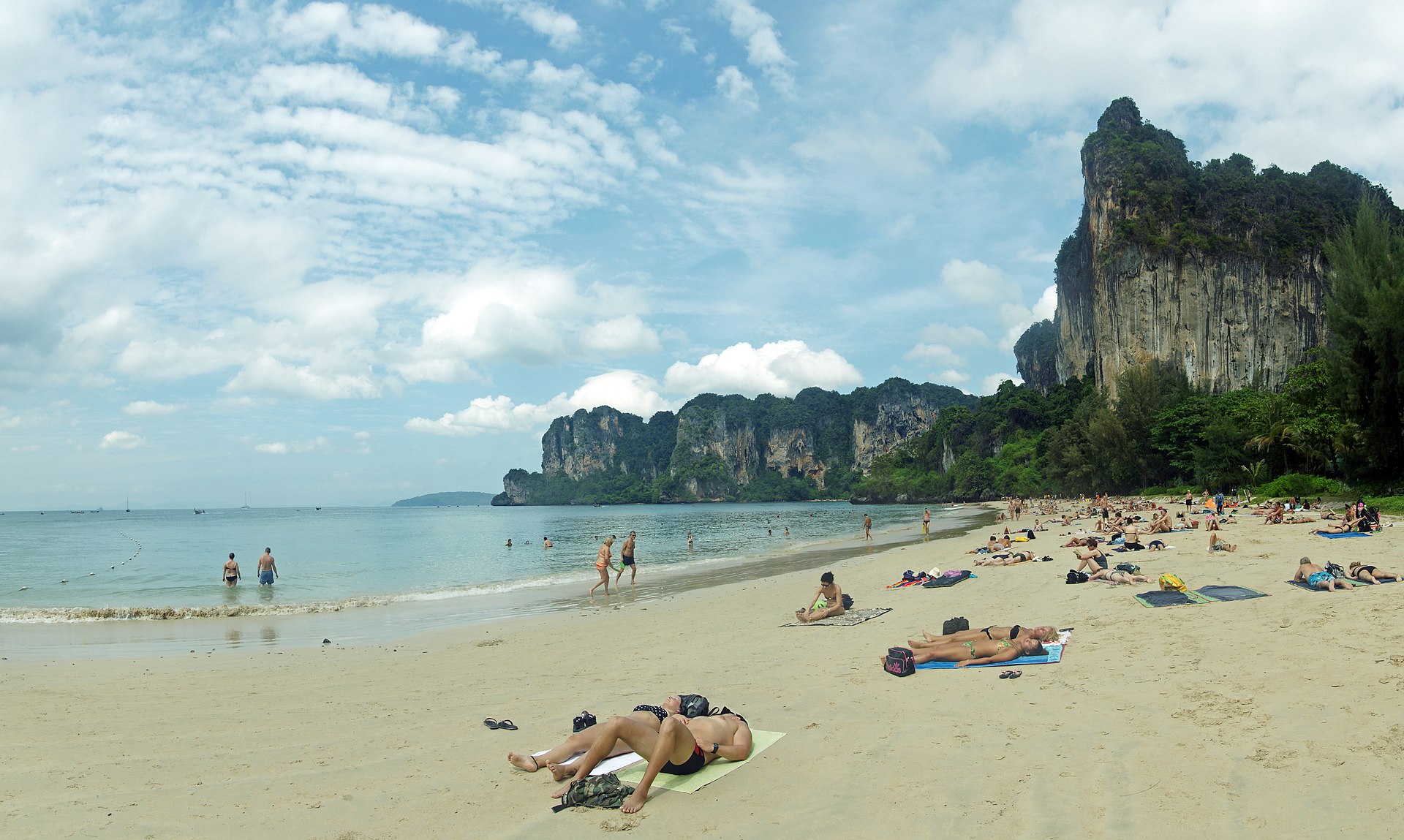
Railay’s draw is its geography: a small peninsula boxed in by sheer limestone cliffs, cut off from the mainland road network entirely, so the only way in or out is by boat. That isolation is what keeps it from feeling like the rest of Ao Nang — no traffic, no motorbikes weaving through, just sand, jungle, and towering karst walls that draw climbers from around the world. With a 4.4 rating across nearly 5,000 reviews, it’s one of the most consistently praised spots in Krabi province, and the combination of beach, cliff, and cave scenery in one compact area is hard to match elsewhere in Thailand.
Getting there
There’s no road access to Railay — every visitor arrives by longtail boat. The two main departure points are Ao Nang Beach and Nopparat Thara Pier, both a short tuk-tuk ride from central Ao Nang. Boats run on a shared basis once enough passengers show up (roughly 8-10 people), or you can charter one outright if you don’t want to wait. The crossing takes about 15-20 minutes and drops you at either West Railay (facing Ao Nang, better for calm-water swimming) or East Railay (facing the mangroves, home to most guesthouses and the longtail pier used at low tide). Some travelers arrive via Krabi Town instead, taking a boat from Khlong Chilat pier, which is useful if you’re coming straight from Krabi International Airport rather than through Ao Nang. Boat fares are typically paid per person in cash at a ticket booth by the pier — expect to pay more if you charter privately or travel outside daylight hours.
What to see and do
Railay is really four connected areas. West Railay Beach has the postcard white sand and sunset views, backed by resorts and beach bars. East Railay is muddier and lined with mangroves but has the budget guesthouses, restaurants, and bars that stay lively after dark. Phra Nang Beach, a 10-15 minute walk south along a paved path from either side, is arguably the most beautiful stretch of sand on the peninsula and home to Phra Nang Cave, a shrine where local fishermen leave offerings for fertility and safe voyages. Above the path, a steep, rope-assisted scramble leads to the Railay Viewpoint (Sa Phra Nang lagoon), a hidden pool inside the cliffs — muddy and strenuous but a favorite for photos.
Rock climbing is the other main reason people come. The limestone walls around Railay and neighboring Ton Sai have hundreds of bolted routes across all difficulty levels, and multiple climbing schools along East Railay rent gear and run half-day and multi-day courses for complete beginners as well as experienced climbers chasing deep-water solo routes. Diving and snorkeling trips to nearby islands like Koh Poda and Chicken Island are also commonly booked from tour desks on East Railay.
When to go
The dry season, roughly November through April, brings the calmest seas and best visibility for boat trips and diving, making it Railay’s busiest stretch. December to February is peak season with the most stable weather. May through October is the rainy season — showers are often short and afternoon-only, and boat crossings can get choppy or occasionally pause during storms, so it’s worth checking conditions before heading out. For photos at Phra Nang Beach and West Railay, aim for early morning or the hour before sunset, when the cliffs catch the light and the day-trip crowds from Ao Nang have thinned out.
Nearby and practical tips
Most visitors do Railay as a day trip from Ao Nang, but staying one or two nights lets you catch the beaches at dawn before the boats arrive. There are no ATMs deep in the peninsula and card acceptance is inconsistent, so bring enough cash for boat fares, gear rental, and food. Tide timing matters for East Railay’s pier — at low tide boats can’t reach the jetty and you may need to wade or walk out further, so factor that into your return trip if you’re day-tripping. Wear water shoes if you plan to visit the viewpoint or Phra Nang Cave, since the path involves scrambling over wet rock and rope sections.
Hotel prices update live and are shown in your local currency. Booking links are affiliate links — booking through them supports our free guides at no extra cost to you.
Live prices from Klook. Booking through these links supports our free guides at no extra cost to you.
Some links above are affiliate links — if you book through them, Wander Atlas earns a small commission at no extra cost to you. It’s how we keep every guide free.
Frequently asked questions
How do you get to Railay Beach?
Only by longtail boat — there's no road access. Boats leave regularly from Ao Nang Beach or Nopparat Thara Pier (about 15-20 minutes), or from Khlong Chilat pier near Krabi Town if you're coming from the airport.
How much does the boat to Railay cost?
Shared longtail boats are inexpensive and priced per person, paid in cash at the pier; chartering a private boat or traveling at night costs more. Prices can shift seasonally, so confirm current rates at the ticket booth.
How long should I spend at Railay?
A half-day covers West Railay and Phra Nang Beach, but a full day lets you add the viewpoint lagoon or a climbing session, and an overnight stay is worth it for quiet early-morning beach time.
Is Railay Beach good for non-climbers?
Yes — swimming, sunbathing, and cave/lagoon walks at Phra Nang Beach don't require any climbing experience, though the viewpoint hike does involve some steep, rope-assisted scrambling.
What's the best time of year to visit?
November to April (dry season) has the calmest seas and clearest water; December-February is peak season. May-October is rainier with occasional choppy boat crossings, though showers are usually brief.
This guide was produced with AI assistance and reviewed against live data sources. Facts such as hours, ratings, and location come from Google Places; images are licensed or public domain. Details can change — please verify before visiting. See our editorial policy.